
| thorny olive | USDA PLANTS Symbol: ELPU2 U.S. Nativity: Exotic Habit: Shrub or Subshrub |
| Elaeagnus pungens Thunb. |
Jump to: Resources | Images | Distribution Maps | Sources
|
Taxonomic Rank: Magnoliopsida: Rhamnales: Elaeagnaceae |
|
| Synonym(s): thorny elaeagnus, silverthorn, spotted elaeagnus | |
| Native Range: Japan (REHD): China, Japan (BAIL); | |
|
|
Identification, Biology, Control and Management Resources
|
| Selected Images from Invasive.org | View All Images at Invasive.org |
 Cultivar; Elaeagnus pungens 'Glen St. Mary Compact' John Ruter, University of Georgia, Bugwood.org Additional Resolutions & Image Usage |
 Fruit(s); Mature fruit with leaves in March James H. Miller & Ted Bodner, Southern Weed Science Society, Bugwood.org Additional Resolutions & Image Usage |
 Foliage; April James H. Miller, USDA Forest Service, Bugwood.org Additional Resolutions & Image Usage |
 Foliage; October James H. Miller, USDA Forest Service, Bugwood.org Additional Resolutions & Image Usage |
 Fruit(s); Nancy Loewenstein, Auburn University, Bugwood.org Additional Resolutions & Image Usage |
 Fruit(s); Nancy Loewenstein, Auburn University, Bugwood.org Additional Resolutions & Image Usage |
 Foliage; Joseph LaForest, University of Georgia, Bugwood.org Additional Resolutions & Image Usage |
 Foliage; Joseph LaForest, University of Georgia, Bugwood.org Additional Resolutions & Image Usage |
 Bark; Karan A. Rawlins, University of Georgia, Bugwood.org Additional Resolutions & Image Usage |
 Fruit(s); Coastal plains, April 2011 Karan A. Rawlins, University of Georgia, Bugwood.org Additional Resolutions & Image Usage |
 Plant(s); January. Photo from Forest Plants of the Southeast and Their Wildlife Uses by J.H. Miller and K.V. Miller, published by The University of Georgia Press in cooperation with the Southern Weed Science Society. James H. Miller, USDA Forest Service, Bugwood.org Additional Resolutions & Image Usage |
 Plant(s); October James H. Miller, USDA Forest Service, Bugwood.org Additional Resolutions & Image Usage |
| EDDMapS Distribution: This map is incomplete and is based only on current site and county level reports made by experts and records obtained from USDA Plants Database. For more information, visit www.eddmaps.org |
 State List This map identifies those states that list this species on their invasive species list or law. 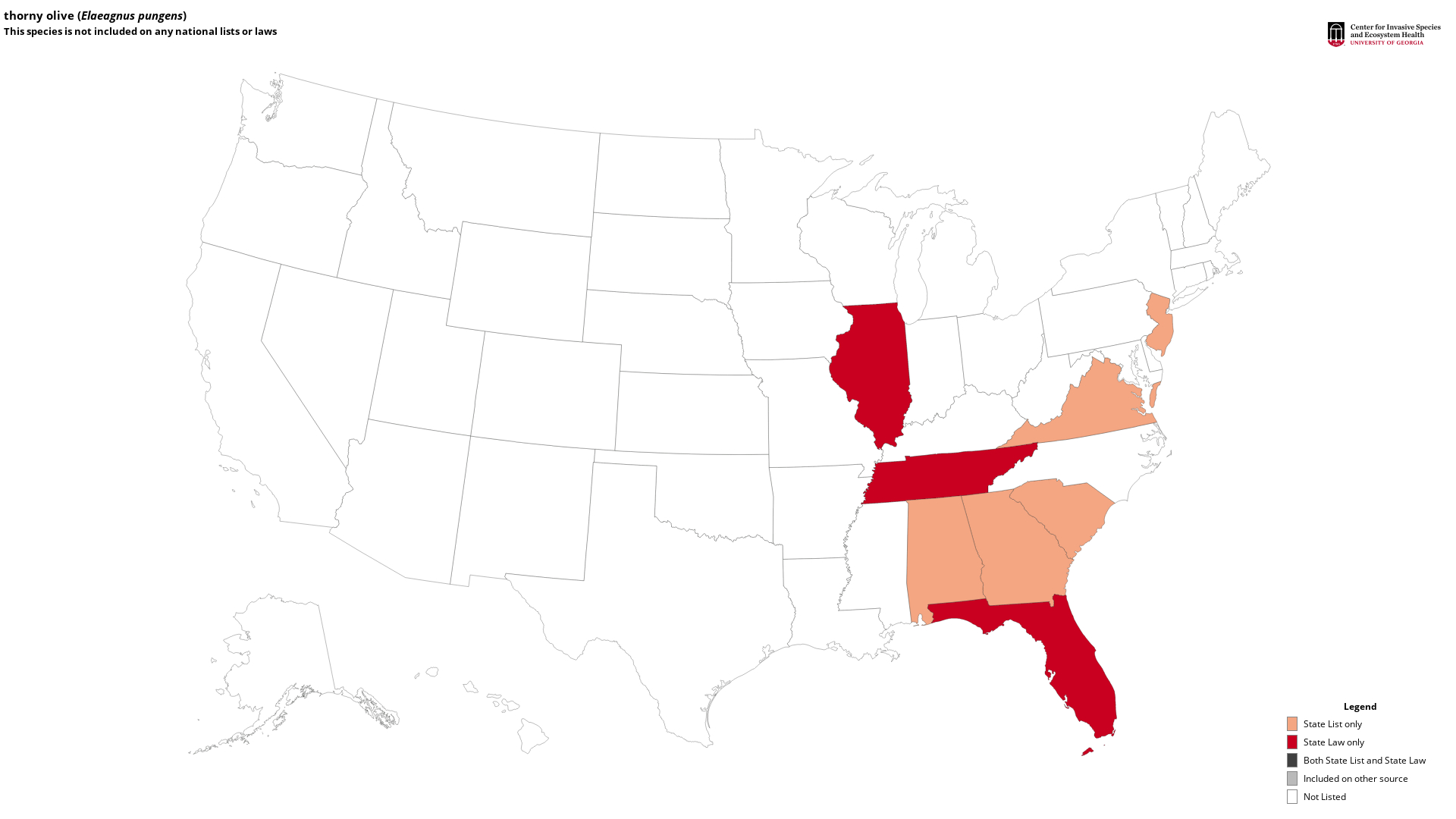
|
| U.S. National Parks where reported invasive: |
| Colonial National Historical Park (Virginia) Petersburg National Battlefield (Virginia) Stones River National Battlefield (Tennessee) |


