
| largeleaf lantana | USDA PLANTS Symbol: LACA2 U.S. Nativity: Exotic Habit: Shrub or Subshrub |
| Lantana camara L. |
Jump to: Resources | Images | Distribution Maps | Sources
|
Taxonomic Rank: Magnoliopsida: Lamiales: Verbenaceae |
|
| Synonym(s): lantana, largeleaf lantana | |
| Native Range: West Indies; Trop. Amer. (BAIL); | |
|
|
Identification, Biology, Control and Management Resources
|
| Selected Images from Invasive.org | View All Images at Invasive.org |
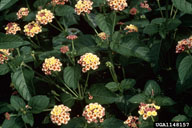 Flower(s); USDA APHIS PPQ - Oxford, North Carolina , USDA APHIS PPQ, Bugwood.org Additional Resolutions & Image Usage |
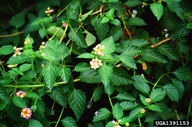 Plant(s); in flower John D. Byrd, Mississippi State University, Bugwood.org Additional Resolutions & Image Usage |
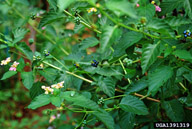 Plant(s); John D. Byrd, Mississippi State University, Bugwood.org Additional Resolutions & Image Usage |
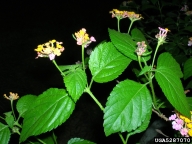 Flower(s); flowers and leaves Forest and Kim Starr, Starr Environmental, Bugwood.org Additional Resolutions & Image Usage |
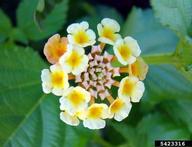 Flower(s); Rebekah D. Wallace, University of Georgia, Bugwood.org Additional Resolutions & Image Usage |
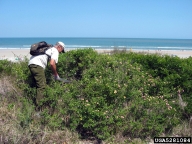 Control; Dan Clark, USDI National Park Service, Bugwood.org Additional Resolutions & Image Usage |
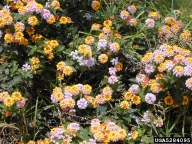 Flower(s); Forest and Kim Starr, Starr Environmental, Bugwood.org Additional Resolutions & Image Usage |
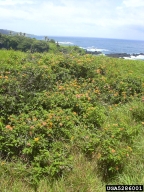 Plant(s); habit Forest and Kim Starr, Starr Environmental, Bugwood.org Additional Resolutions & Image Usage |
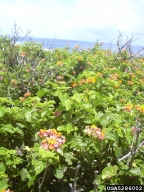 Flower(s); Forest and Kim Starr, Starr Environmental, Bugwood.org Additional Resolutions & Image Usage |
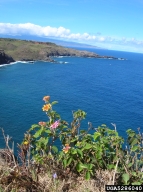 Plant(s); in flower Forest and Kim Starr, Starr Environmental, Bugwood.org Additional Resolutions & Image Usage |
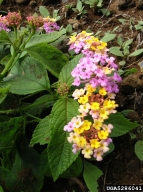 Flower(s); Forest and Kim Starr, Starr Environmental, Bugwood.org Additional Resolutions & Image Usage |
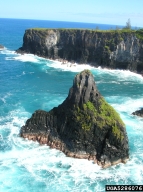 Infestation; Forest and Kim Starr, Starr Environmental, Bugwood.org Additional Resolutions & Image Usage |
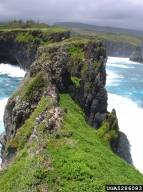 Infestation; Forest and Kim Starr, Starr Environmental, Bugwood.org Additional Resolutions & Image Usage |
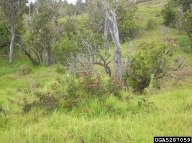 Plant(s); with red flowers Forest and Kim Starr, Starr Environmental, Bugwood.org Additional Resolutions & Image Usage |
| EDDMapS Distribution: This map is incomplete and is based only on current site and county level reports made by experts and records obtained from USDA Plants Database. For more information, visit www.eddmaps.org |
 State List This map identifies those states that list this species on their invasive species list or law. 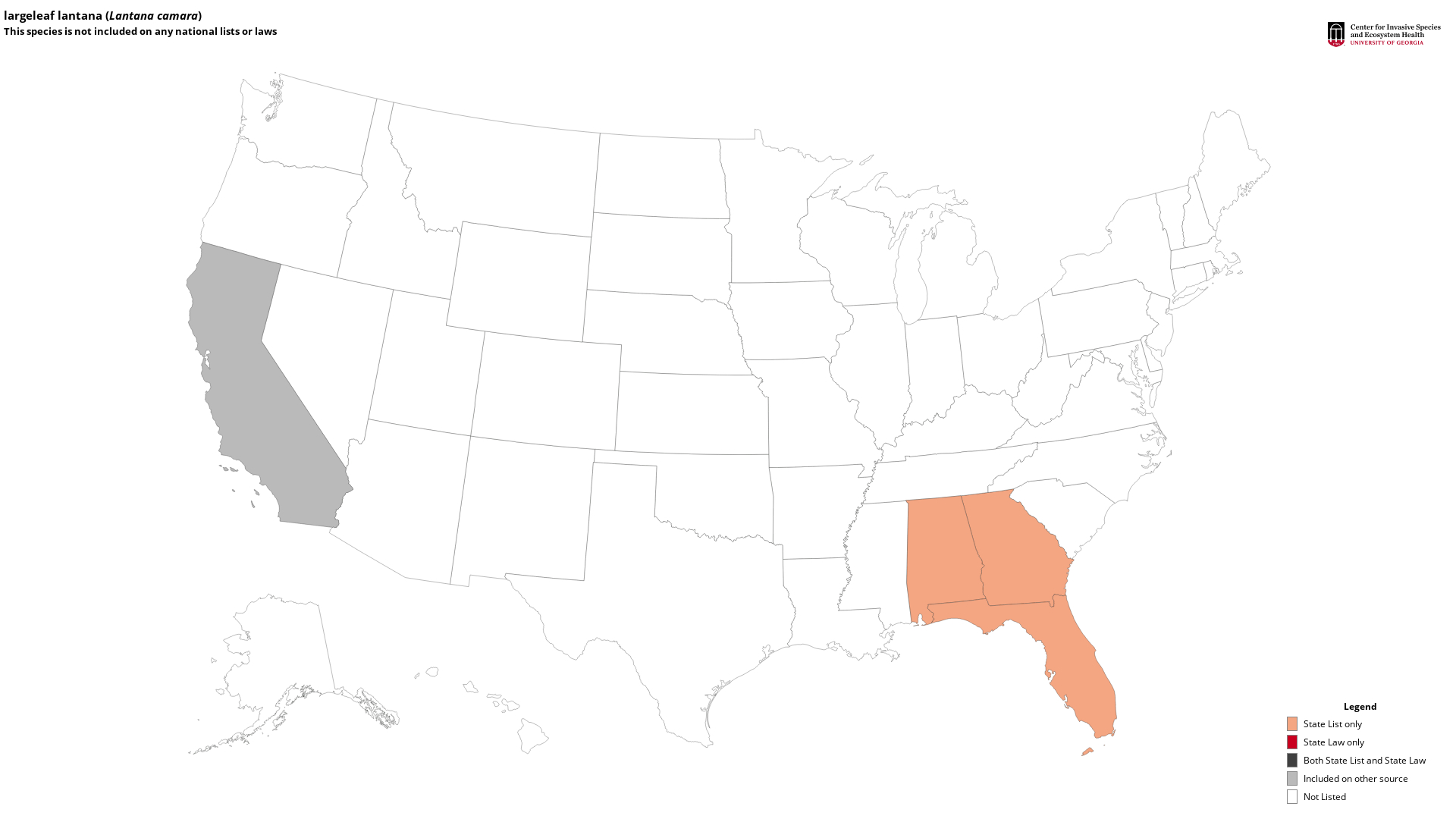
|
| U.S. National Parks where reported invasive: |
| Haleakala National Park (Hawaii) Organ Pipe National Monument (Arizona) |


